Spotlight On Preston Gannaway
Oct 15, 2011
Originally published 02/19/2011
TID:
Preston, thanks for being a part of our discussion.
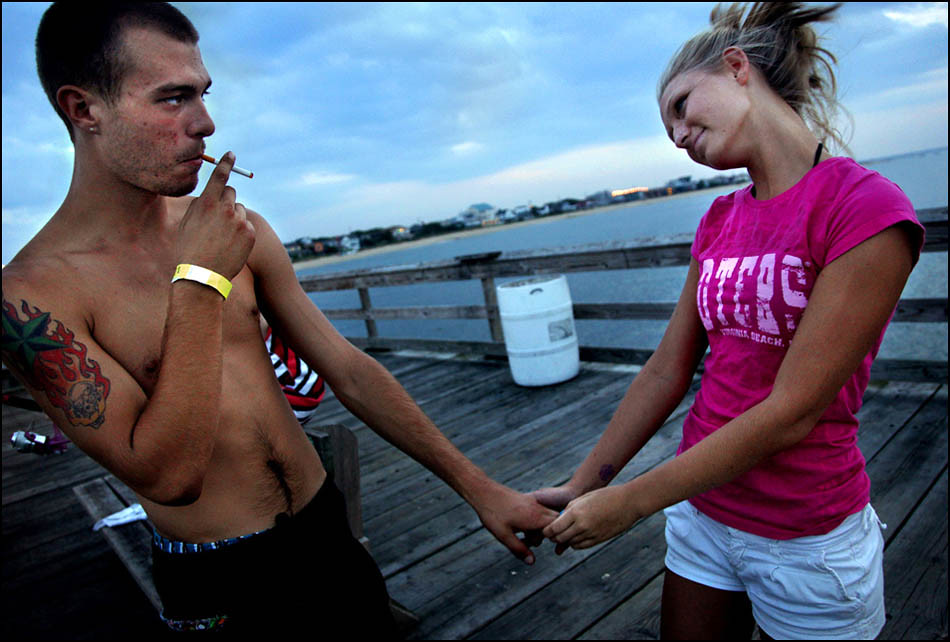
This image is part of a larger body of work. Can you
tell us what the project is called, and what you're trying
to achieve with it?
PRESTON:
The project is called "Between the Devil and the Deep
Blue Sea," and it's one that began when I moved to
Norfolk two years ago. It's a visual exploration of the
neighborhood I live in, and consists of both personal
work and images I shot for The Virginian-Pilot. The
majority of the images were for a photo column in the
paper. I was really interested in taking on a project that
was more personal, more conceptual, and I wanted an
opportunity to make some pictures in a less
traditional photojournalism way.
TID:
How did you find this couple and why photograph them?
PRESTON:
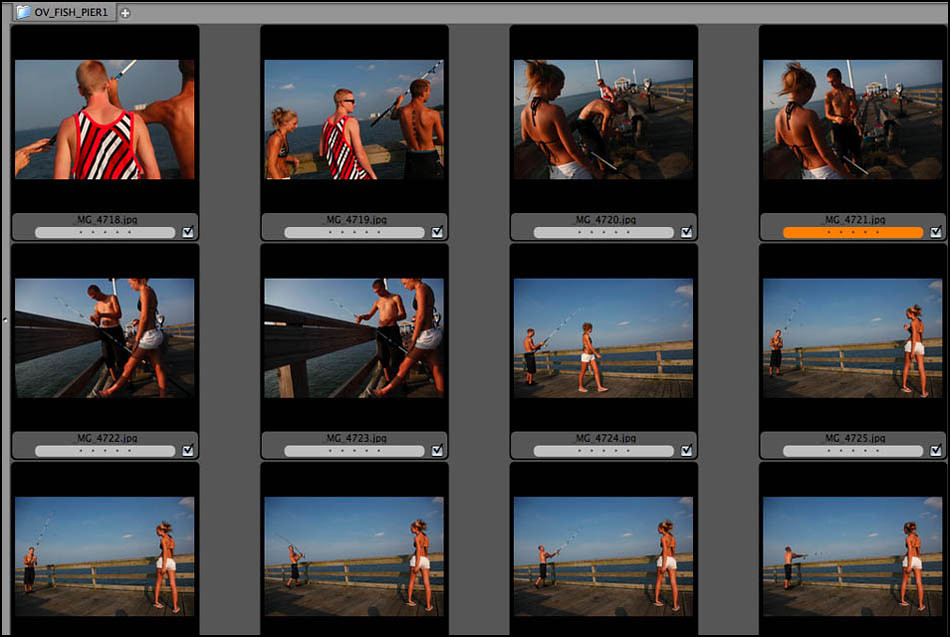
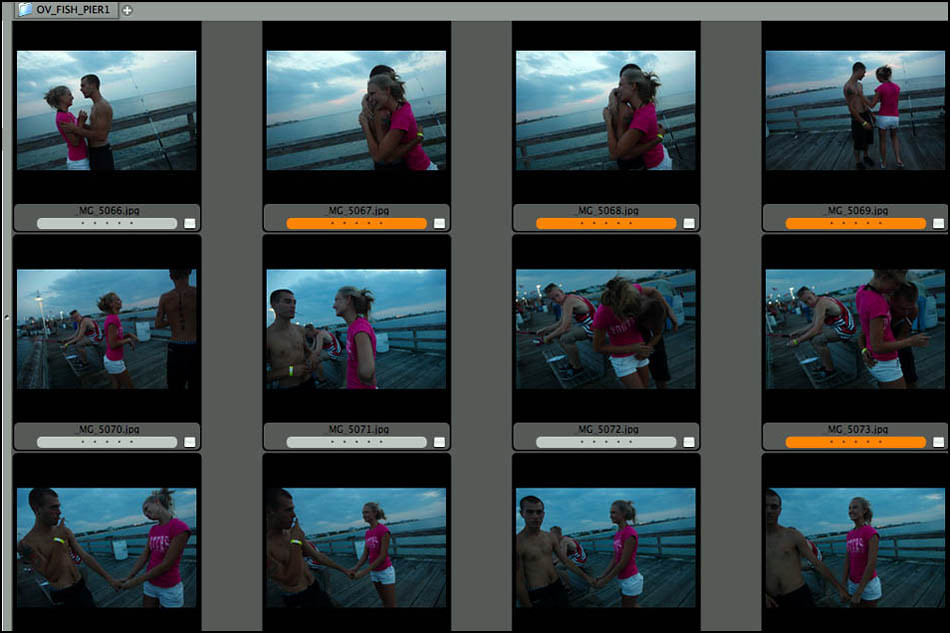
I took an afternoon to find a story on the pier.
Recreational and commercial fishing is a big
part of life here, and I knew I'd be able to make
a photo there. You know, it's often hard to
pinpoint exactly what draws you to a particular
subject. It could be someone's face or an action
that draws your attention to them, or just some
subconscious impression that they might make a
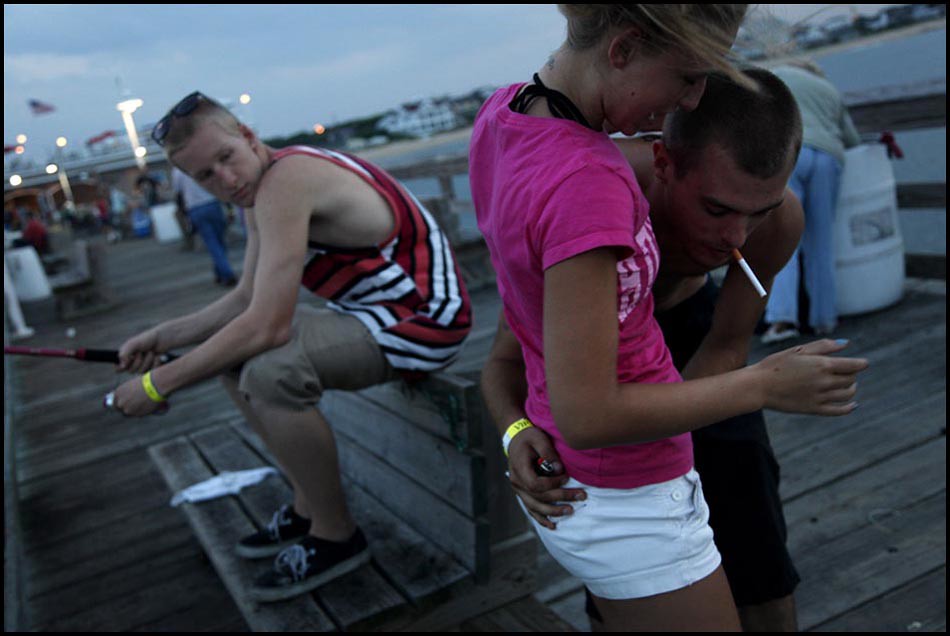
picture. There were three people in this particular
group (this couple and a friend tagging along), so
that always adds more possibility for interaction
and moments. The friend was dressed pretty stylishly,
with big sunglasses and a bright striped shirt.
Often with this project, I'd head out hoping to find
a photo that reflects a particular demographic or
theme (The idea of beach romance being one). I really
want the body of work to be as diverse as the
neighborhood itself. But mostly, they just seemed really
open when I approached them and game to the idea of
being photographed.
So I stuck with them.
TID:
Can you talk about how this image was made?
PRESTON:
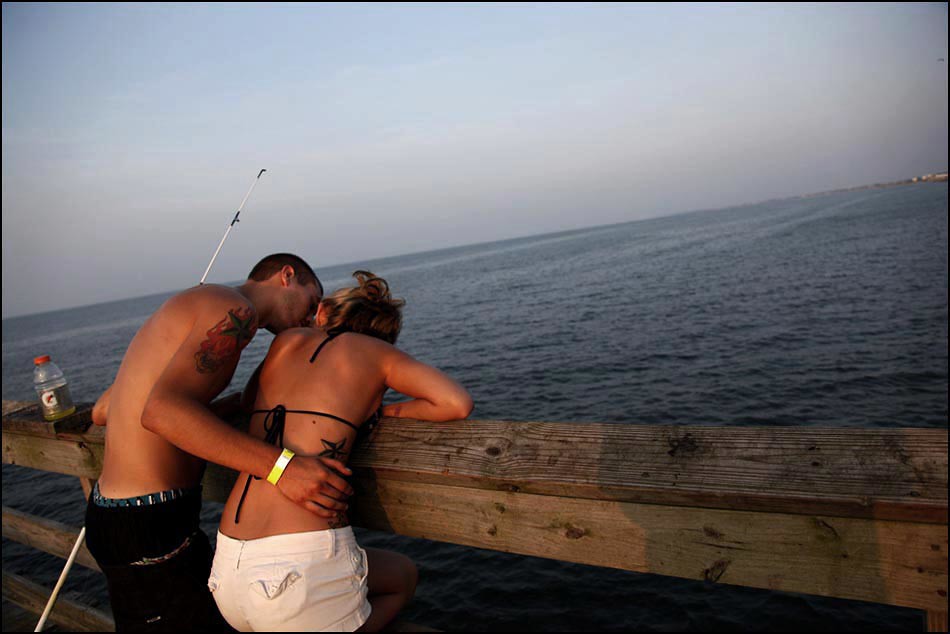
This was at the very end of my time with them, it was
getting dark and they were about to head home. I'd been
shooting for awhile and so I was getting a bit more
comfortable with pushing previous boundaries of intimacy
and physical proximity. It's always a dance trying to
figure out what the subject's comfortable with and how
comfortable they are with having you around. Much more
of my energy and attention goes into reading the subject
and/or the situation than any actual photographic tasks.
So, when you reach that magic point where you don't have
to worry so much about them, the rapport is in place, it's
so amazing. That's when you can really shoot.
TID:
Was there any conflict, or a moment when the couple
didn't want you taking pictures?
PRESTON:
No. They were totally cool. And fun to be with. They
were a bit bashful about the semantics of their
relationship (they weren't "dating," just friends.) But I
think all that comes across in the picture which is
what I like about it. It illustrates that charged moment
of tension and flirting that only happens
at the beginning of a relationship.
TID:
How long did you spend with this couple?
PRESTON:
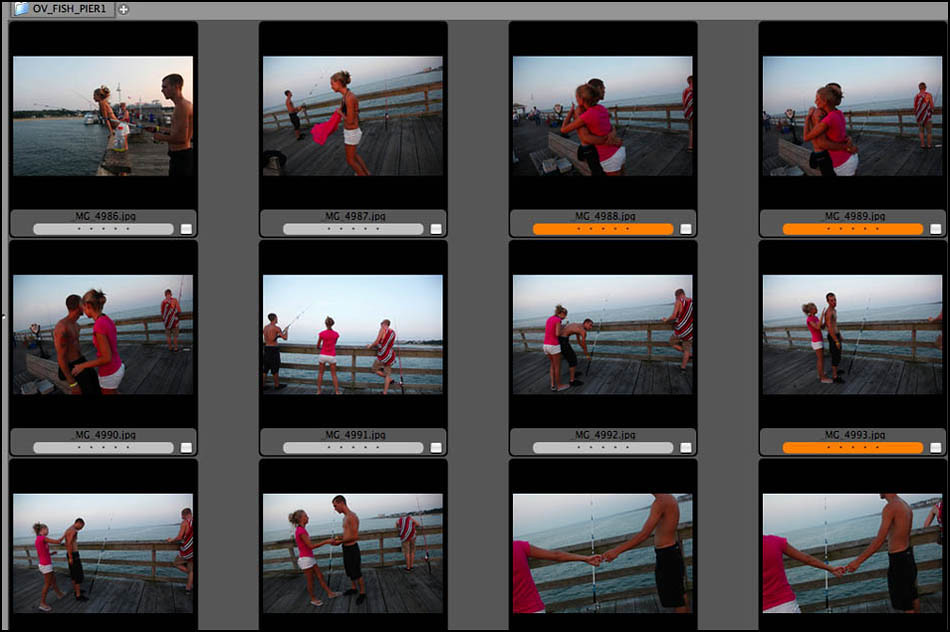
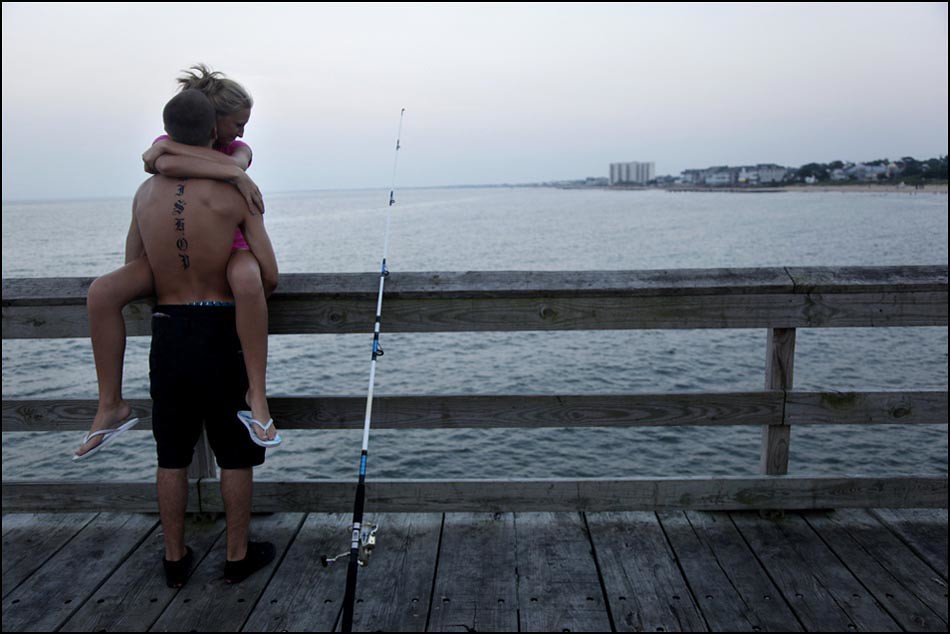
I spent almost 2 1/2 hours there with them. I think
that's a personal record in terms of time spent with
a stranger I approached out-of-the-blue.
With most of the found situations in Ocean View it was
more like half an hour. And then with the research-
based photos, I would usually do a few different shoots
over a few days. Frankly, it just takes time to make real
documentary photos. Way more time than most people
realize.
Since these kids were able to put up with me that
long, it simply increased the odds of my making a real
photo. Some situations don't really warrant that kind
of time, if there's not much potential to start. But
these two people obviously had a lot of chemistry.
It had to come out. The longer I was there, the less
physically private they were with each other. I was
just waiting for the moment when they could express
themselves, when they were comfortable with me
photographing it, and when I could do my job of
bringing it together in a single frame.
TID:
What did you learn from the process of making this
image that you didn't know before (or if you didn't
feel you learned anything, what struck you about the
making of this image that was unique?)
PRESTON:
As I mentioned before, it was mostly the time spent with
a subject I found while feature-hunting. And I was surprised
by the intimacy that came out in that process. That's pretty
rare. More often, those moments come after I've spent months
photographing someone. In terms of what I learned, I guess it
just helped build confidence in my work style. With this couple,
and I'd say 90% of the people I shoot, they respond to someone
who's real and genuine.
If I'm at ease, they're at ease.
TID:
Preston, one of the things I admire about you is your
temperament and your approach to people you photograph.
For those who don't know you, can you talk about your mental
approach to documentary work in general terms?
PRESTON:
Thanks. When I was working early on at the Concord Monitor,
Dan Habib once told me that the subject has to want to have
you around. That might sound obvious to some, but it sorta
opened a whole window to me on how I needed to approach
subjects differently. Prior to that, I always thought, "Okay. I'm
going to be boring. I'm a fly on the wall. People need to pretend
that I'm not here." And that just wasn't working for me.
I've really found that building rapport and trust is a two-way
street. I've always been a pretty shy and quiet person. Now I
force myself to talk to people more than I'd be inclined to naturally.
Plus, I realized that you really can look creepy silently following
people around with a camera.
If I were to really pick it apart, I think I try to exaggerate what I have
in common with the subject, to put us on equal footing. Luckily, I'm
physically very non-intimidating. I also slow down and act very casually.
No sudden movements. That keeps people from getting nervous.
I find that people who are calm are just plain easier to have around.
TID:
Thanks a lot, Preston. Before we go, I'd like to ask one more
question. Since this image is part of a largely self-assigned
project - do you have any advice for photographers looking
to work on self-generated projects?
PRESTON:
Yeah. You have to be totally committed to it. Documentary
work doesn't affect the bottom line. So it can be very difficult
to get people to put resources behind it. I hope that eventually
changes, but right now it's just part of the reality. You have to
find a way to work on it and then find ways to get it out to an
audience. I'm really lucky that my editors at The Pilot give me
time to work on it and publish so much of it. On the flip side,
having mental ownership over a project is so great. I push
myself so much harder. And I can only shoot when the light is
nice, if I want.
UPDATE 10.7.13
TID:
We’re revisiting this post just as you have decided to wrap up the project by publishing a book on it. I'd like to hear more about your ideas of "finishing." How did you know this project was finished?
PRESTON:
They say that projects are not finished, just abandoned. With this one, I definitely felt that way. I simply ran out of money. I moved to California at the beginning of the year, and at a certain point I could no longer justify the expense involved with traveling back to Virginia to shoot. Sometimes it just happens that way. I wish I could have spent more of my time focused on it when I was still living there.
While working at a newspaper, there's always a rather narrow need that has to be filled - in addition to an audience of picture editors, word editors and readers to please. Once I was working independently, I felt much more free to pursue visual storytelling the way I thought it should be told.
Time is the number one ingredient here. We see it again and again in these TID interviews. Once I left the paper, I had the power to decide when and how I should spend my time.
TID:
Can you expand on what you mean by “the way it should be told"? Have you shot this project differently since you've left the paper?
PRESTON:
As they say, to go beyond the 'what' and to show the 'how', the 'why'. I always try to move beyond the literal in my photographs, but with this project I'm working towards that on a much larger scale.
Yes, I've definitely shot this project differently since I left the paper. Here's a micro example: when I was shooting for the newspaper's photo column, I had to shoot and edit the take based on what (or who) I could build a written story around. That changes the process quite a bit. In working on the larger project and book edit, we've been able to go back through the takes to find images that build a sense of place, or create a mood -- that tell the story in a different way. We can revisit images that were overlooked initially because they didn't fit into the mold needed for the newspaper. That mold is not necessarily a bad thing, it's just a very different way of telling a story. It's sort of like the difference between a news brief and feature magazine story -- or a TV show and a two-hour film. You're going to use a different story structure and different pieces within that structure.
TID:
So why a book?
PRESTON:
When I decided to break away from the paper, part of the motivation was to be able to focus on long-term projects and have more artistic control over them. I felt like I was on this hamster wheel, furiously producing content year after year. I wanted to slow the pace down and be more thoughtful and deliberate about the stories and projects I was taking on.
Part of that was considering what happens to the images after I take them, and wanting a life for them beyond one day's newsprint and hard drives stored in a closet.
I looked around for a local gallery in Norfolk to exhibit the Ocean View photographs and didn't have a lot of luck so I decided a book was a better -- and more permanent -- way to go. Photo books are a niche market and I wanted to be able to produce a high-quality book. So finding a good local designer was important. The price point we've settled on is not as low as I would have liked, but the value that comes with a small limited edition should help off-set that. The goal is not to have a mass-produced commodity, but rather have the book itself be a piece of art. By “art” I mean something that you can enjoy on multiple levels - emotionally, intellectually, aesthetically, tactilely. I guess you could also say hand-made. The book won't be hand-made, but it should have the feeling that it was, with attention to every detail.
In terms of the book project, I'm still in the very early stages. Funding is a major component and so the Kickstarter campaign has been a crucial step. Much of the fun, creative book process is still to come!
This is my first year working independently, and I've focused on finishing Between the Devil and the Deep Blue Sea and one other story. The transition to freelance can be a bit of a shock to the system so it was important for me to continue working towards projects I feel strongly about, not just assignments that pay the bills.
I'm learning that you've got to put yourself out there and take risks. And that every endeavor requires way more work than you think!
++++
Preston Gannaway (b. 1977) is an American documentary photographer. For more than 12 years, she has focused on intimate stories about American families and subcultures. She has worked as a staff photojournalist for The Virginian-Pilot, the Rocky Mountain News and the Concord Monitor in New Hampshire. Her stofry on the St. Pierre family, Remember Me, was awarded the 2008 Pulitzer Prize for feature photography.
Preston’s photographs have been exhibited both in the United States and abroad. She is a regular lecturer and has served as guest faculty in a variety of educational workshops. A native of North Carolina, she began her career after earning a Bachelor of Arts in fine art photography at Virginia Intermont College. She is currently based in Oakland, California, accepting editorial and commercial work while pursuing long-term projects.
Her first book project, Between the Devil and the Deep Blue Sea, is now on Kickstarter:
http://www.kickstarter.com/projects/gannaway/between-the-devil-and-the-d...
You can view her work at:
http://prestongannaway.com/
follow her on Twitter: @pgannawayphoto
Facebook: www.facebook.com/prestongannawayphotography